

What Does It Take To Get Into Animation
Now that nosotros understand the bones concepts of what blitheness is, lets get over the workflow of creating animation.
First, I'll go cover the basic steps of the animation filmmaking pipeline (all the moving parts it takes to create an animated movie), and so I'll breakdown the process of actually animating a shot from starting time to terminate.
And so what are the steps of making an blithe film?
1. Story
The start (and probably the most of import) function of making any motion picture is a good story.
If y'all don't go your story right from the offset, and then no affair how great your film looks, people will not enjoy watching it. Story comes beginning. brand sure information technology'southward adept and that it works before you move on.
In blitheness, the story often evolves and changes during production, since y'all're not restricted to whatever shots you got on set, so the more work y'all put into developing your story, the more y'all reduce wasted time during production.
ii. Script
Once the idea for the story is set up to put into words, the adjacent step is writing the script.
Information technology'southward important to transfer the idea into words as presently as you tin, so that we can spot any issues with the story before getting into production.
iii. Concept Art
One time the script is set, concept art is often created to establish the visual mode of the film.
That'south a actually fun step, and is the first take a chance we become to see parts of the film come to life on paper. It'southward all almost exploring and trying things out.
four. Storyboard
Next is creating a storyboard, which is probably one of the most important steps in figuring out the film.
Storyboarding allows you to look at your film as a whole and spot story and pacing issues. Making one likewise provides you with something yous can testify other people for feedback. Most people react better to a storyboard than a script.
Once we're happy with the boards, we motion on to creating an animatic.
five. Animatic
An animatic is the flick version of your storyboard.
If storyboard is like a comic book, so an animatic is like a movie.
We bring all the boards into an editing program and edit them with the correct timing, add some temporary music and sound effects (but enough to convey the different story beats), and when we're done we have the first version of our film set up to scout.
As great as a storyboard is, an animatic actually gives us a starting time glimpse into what our film is going to be like.
vi. Creating Assets
At this point, depending on your animation medium of choice, nosotros'll be creating the different avails for our moving picture.
For 3D blitheness we'll create the models for the characters, environments, sets, and the props. We'll utilise the concept fine art and model sheets as our reference. These models will then have to be rigged with a 3D skeleton with controls, so that nosotros can animate them in our scene.
For 2D blitheness we'll draw the background, finalize the character design sheets, and if necessary - rig the characters in our 2nd animation software.
For stop-motion animation we'll build our sets, our puppets, the props and dissimilar pieces of clothing needed for the moving-picture show.
7. Previs
Before nosotros get into animating our scenes, there'southward another important step in making sure the story works, and that is creating a previs (or pre-visualization).
A previs is the next incarnation of the animatic, this fourth dimension using 3D models.
We ready our shots in the 3D program, with the terminal camera angles and movement, and create very basic blitheness for the characters, just enough to convey the action they're suppose to be doing.
We then bring all of these shots to the editing programme, but like nosotros did with the animatic, and nosotros now take a previz version of our picture, with the correct 3D models and camera motility.
because animation takes a very long time, this is the terminal chance we can have to make whatever serious story changes in our picture show. It will be a huge waste if we had to make story changes afterward the animation phase.
8. Blitheness
We're finally ready for animation!
This is where we finally bring life into the film. The characters start to motility, and nosotros can see the soul of the motion-picture show come up to life in forepart of u.s.a..
Information technology's an amazing thing to come across, but it also takes a long time. Done incorrectly, information technology tin can ruin our movie. Bad animation is like bad acting: Fifty-fifty if the writing and story are solid, people won't observe if the delivery is all wrong.
We'll go deeper into the vi steps of blitheness afterwards in this section.
9. Texturing | Lighting | Rendering
This step applies mostly to 3D animation, though 2nd blitheness goes through like mail service-production steps similar to this, and cease-motion animation spends a long fourth dimension doing compositing and miscellaneous furnishings on summit of their shots as well.
In 3D, models need to be textured, which means creating unlike materials assigned to the different parts of the models. Some simulate metal, some plastic and even a few for skin and hair.
We then light the shots with virtual lights, replicating every bit closely as nosotros can how low-cal works in real life.
Then when our shots are textured and lit, nosotros start the rendering process, which is the computer computing all of the data in our scenes, and creating nevertheless images from information technology.
Nosotros then take these images to a compositing program, like Nuke or After Effects, excerpt the necessary data from the images, and combine them to create our terminal images.
10: Editing | Color correction
Once our images are composited and fix, we bring them dorsum into our editing programme and replace our previs shots with our new composited shots, just similar nosotros replaced the animatic shots with the previz.
We are now able to see our finished motion picture on the editing timeline for the first time, but, it's not really finished nevertheless. We need to do some color correction and grading.
Color correction is the process of manipulating the colors of each individual shot and so that it matches the one the comes before / after it. We as well brand sure each shot doesn't have parts that are too white or too blackness, basically working and then that nosotros get a consistent and correct color all throughout the film.
Then nosotros grade our pic, which is the more fun and creative part, in which we attempt to create a visual manner for the whole film, and give it a distinct look.
eleven. Music | Sound pattern
Ideally we've been working with a musician from day 1 of product, making sure the music fits what we were trying to do with the picture, and making sure the movie works with the music.
Music is not commonly something nosotros simply slap on at the end, and and then I adopt to have information technology with me throughout the production so it becomes an integral role of the story.
The sound designer then finalizes all the pic'due south sound effects like folly, ambiance and voices, too every bit mastering and mixing in the final audio of the film.
If you want to know more about making animated shorts...
Cheque out the course bellow
The 6 steps of animation
Nosotros've talked nigh the workflow of the animation filmmaking pipeline, at present lets get into the actual steps of character animation.
Hither are the half dozen steps of animation:
- Shooting reference video
- Key posing
- Blocking
- Splining
- Smoothing
- Adding life
Step one: Shooting Reference video
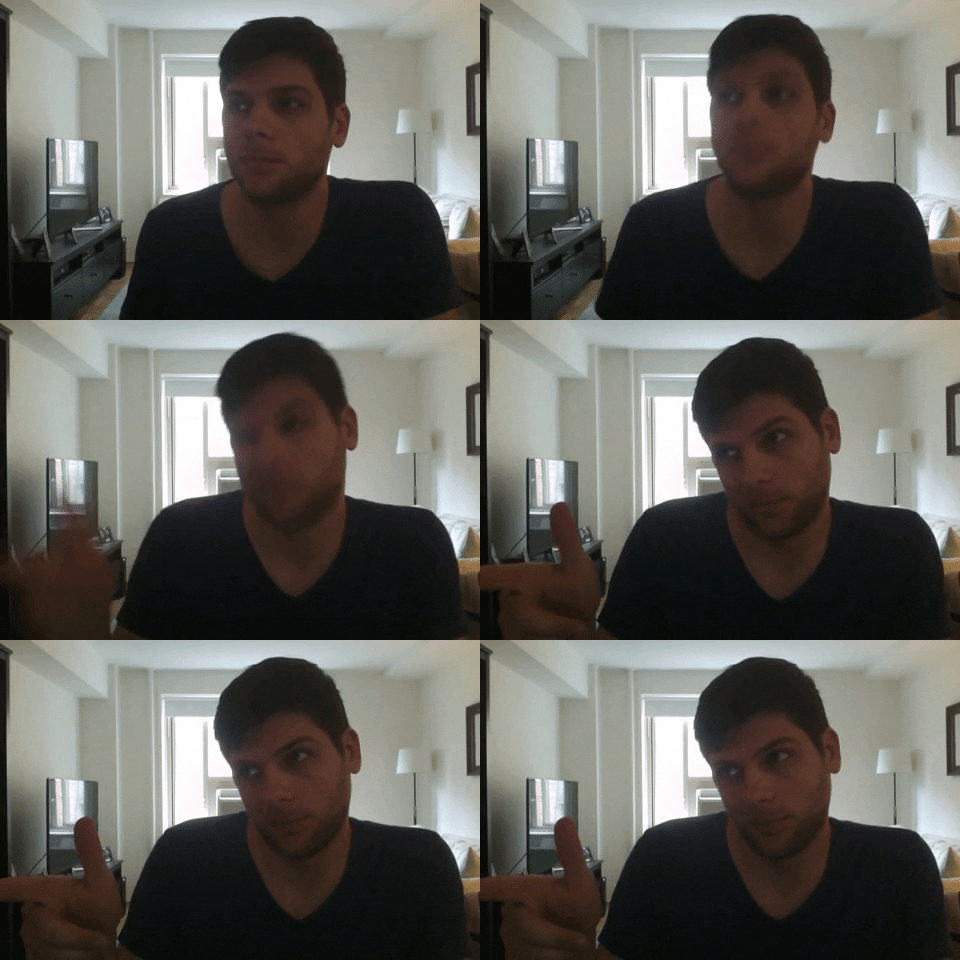
This is a very important and overlooked step. It's weird how people really call back they know what certain actions look similar, and how long they take, but end upwards getting it wrong.
Concrete actions are something you demand to analyze before animative, especially if you're a beginner.
You have a shot of a guy throwing a baseball? Search YouTube for videos of pitchers throwing assurance.
Don't assume you know what an activity looks like just because you've seen information technology before.
Looking at an activeness as an animator is completely different from looking at it equally a viewer.
Stride 2: Posing
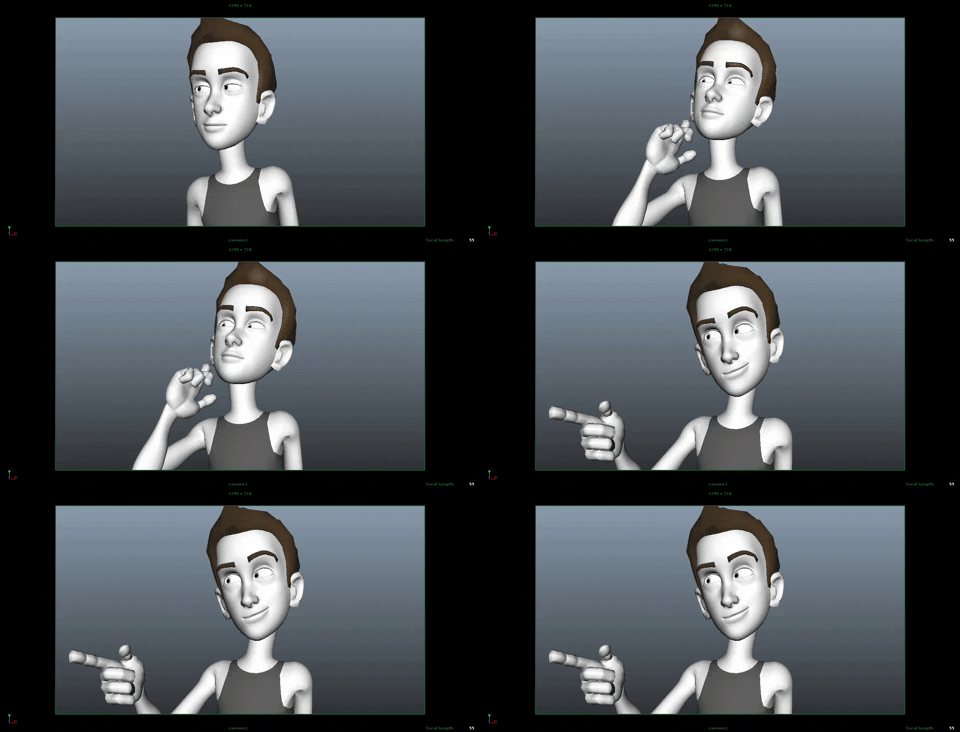
After shooting a reference, it's fourth dimension to create thecardinal poses of the shot.
These poses are chosen cardinal poses considering they are the about important poses of the shot. These are the poses that convey the story of the shot. We demand to make certain weget those poses right, because we're going to build on those for the rest of the procedure.
Step 3: Blocking
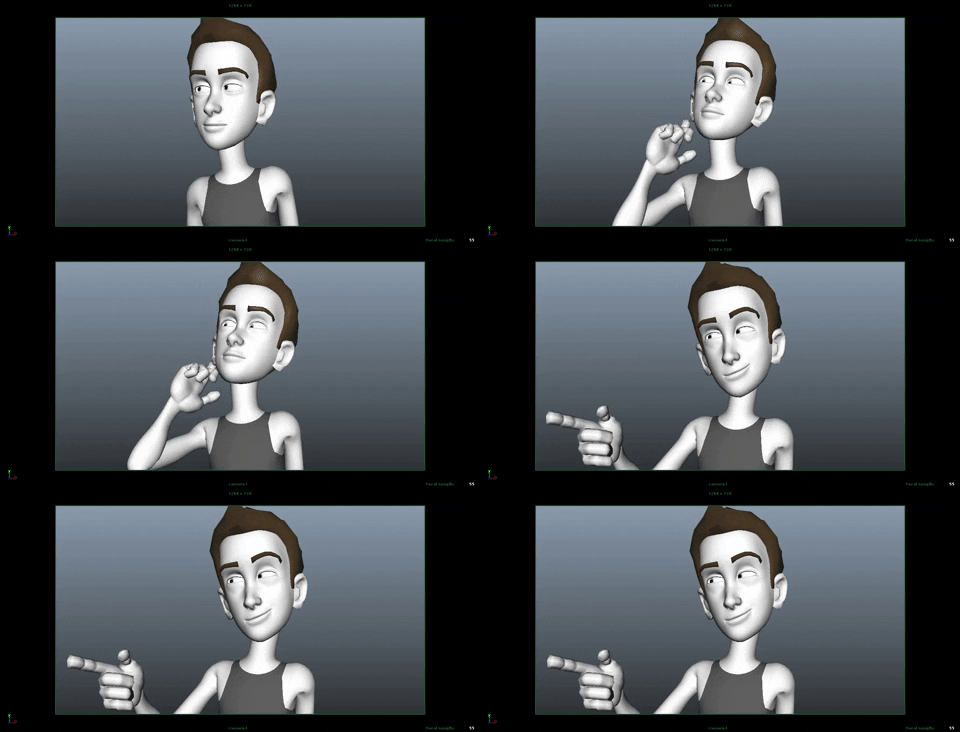
Once we're happy with our key poses, nosotros start breaking downwards the motility from each pose to the next by adding 'in betweens' (also known as breakdown poses or passing poses).These are the poses that connect the central poses.
We keep adding more poses until the movement looks as good every bit it could, while nonetheless staying in stepped manner (stepped fashion is when y'all don't let interpolation between poses, which results in a very inclement/blocky motion).
Pace iv: Splining
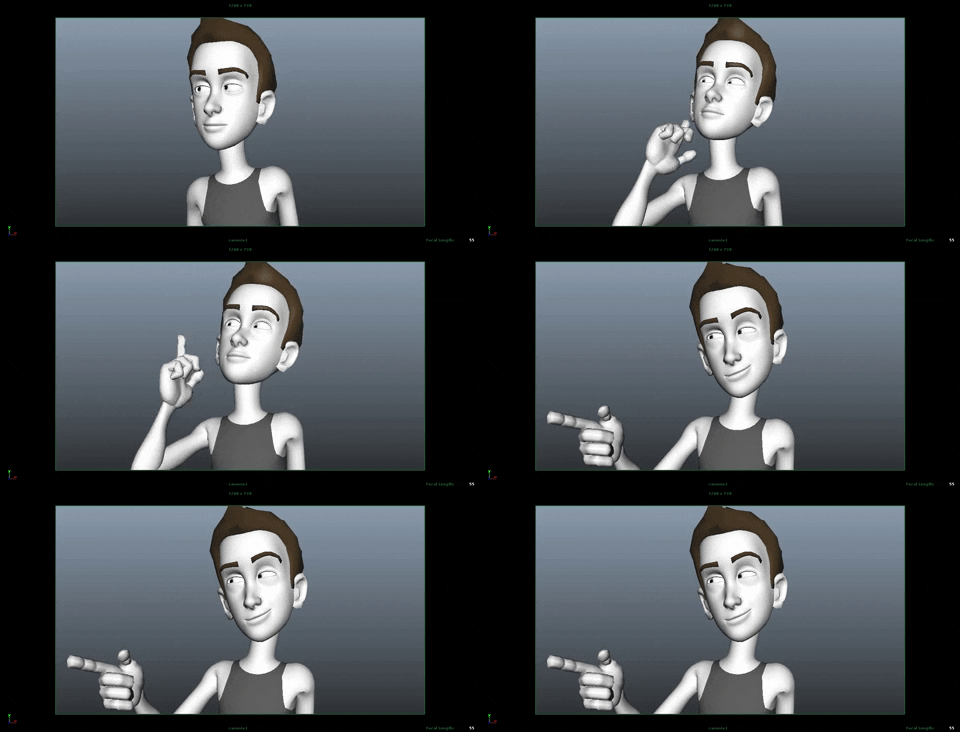
Splining is a 3D animation term. It's the process in which you convert the interpolation of the keys from stepped to spline.
In other words – you brand the figurer connect the move between each of your poses, and that makes the movement look smoother.
The problem is that the figurer doesn't practise a very skillful job at interpolating. It only works with what it has. That's why the better the blocking is – the amend the splined version is going to look.
Step 5: Refining & offset
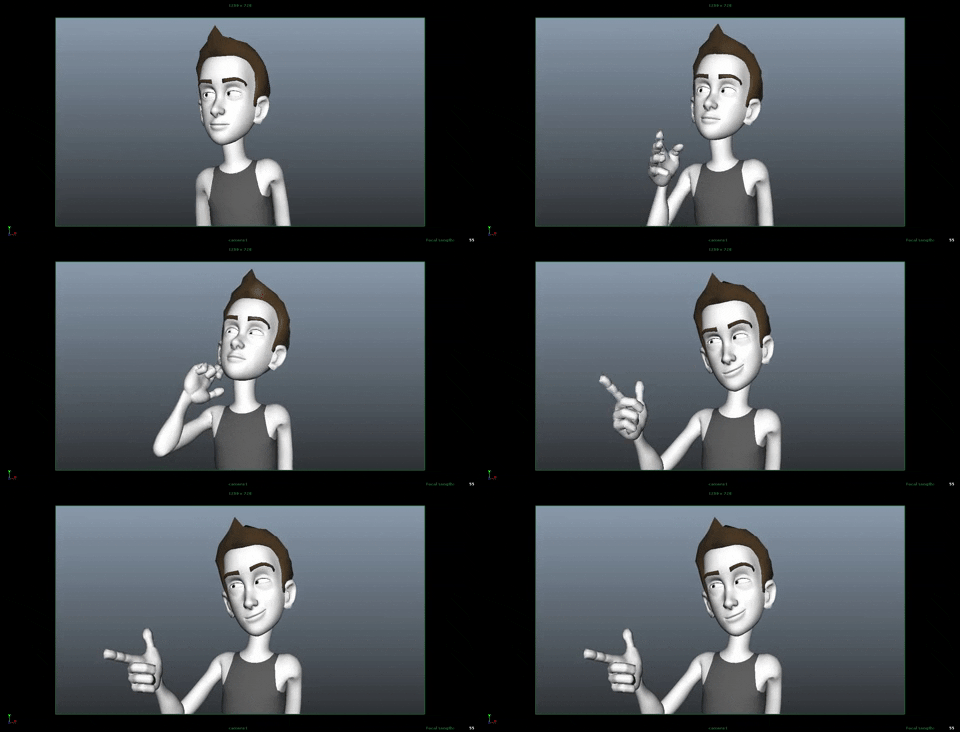
Now that all of our keys are in spline mode, we need to piece of work on them. We refined the animation curves and make certain the movement looks smooth.
It'south also a good idea to offset some of the actions so it doesn't await and so 'stop and start', as if the character is doing all the movement at once.
By the end of this pace your shot should look pretty solid and almost finished.
Step 6: Adding life
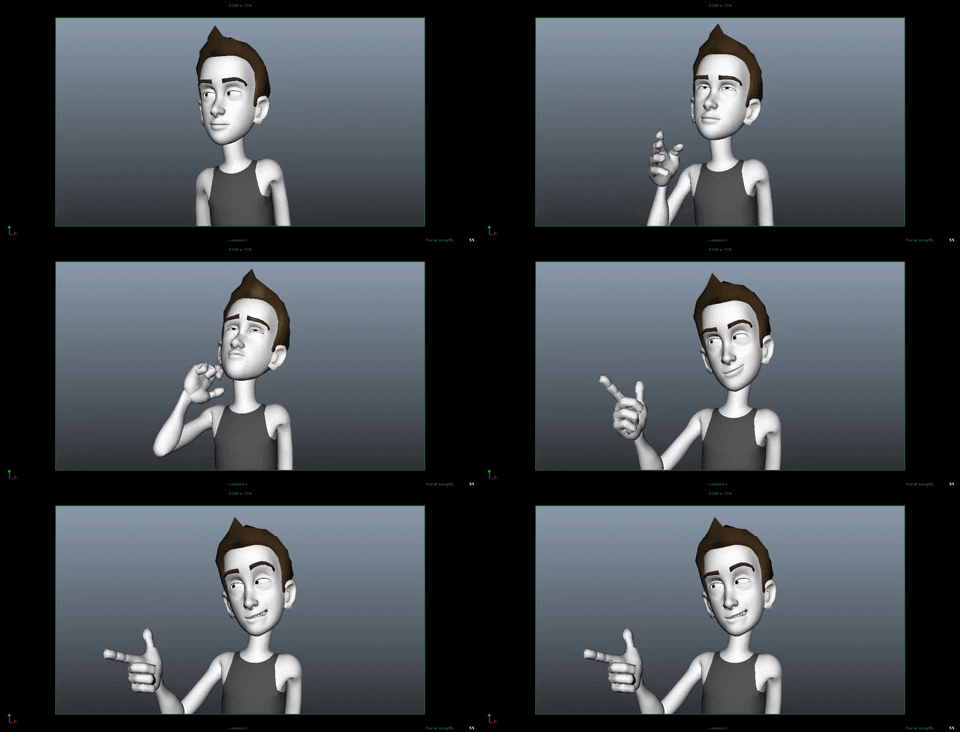
This step is the a lot of fun.
We're already finished with the grunt work of animation, and it's fourth dimension to addsmall imperfections that bring life to the character.
Mayhap an extra blink or a mouth twitch here and in that location. The difference between the last 2 steps is small merely it could make the deviation between expert animation and keen animation.
Source: https://www.bloopanimation.com/animation-for-beginners/
Posted by: wolferemplume.blogspot.com
0 Response to "What Does It Take To Get Into Animation"
Post a Comment